Robots that remember the building.
Spatial maps, object permanence and learned recoveries, stored on the machine and shared across the fleet. Offline first. One robot learns a reroute; every robot has it on the next sync.
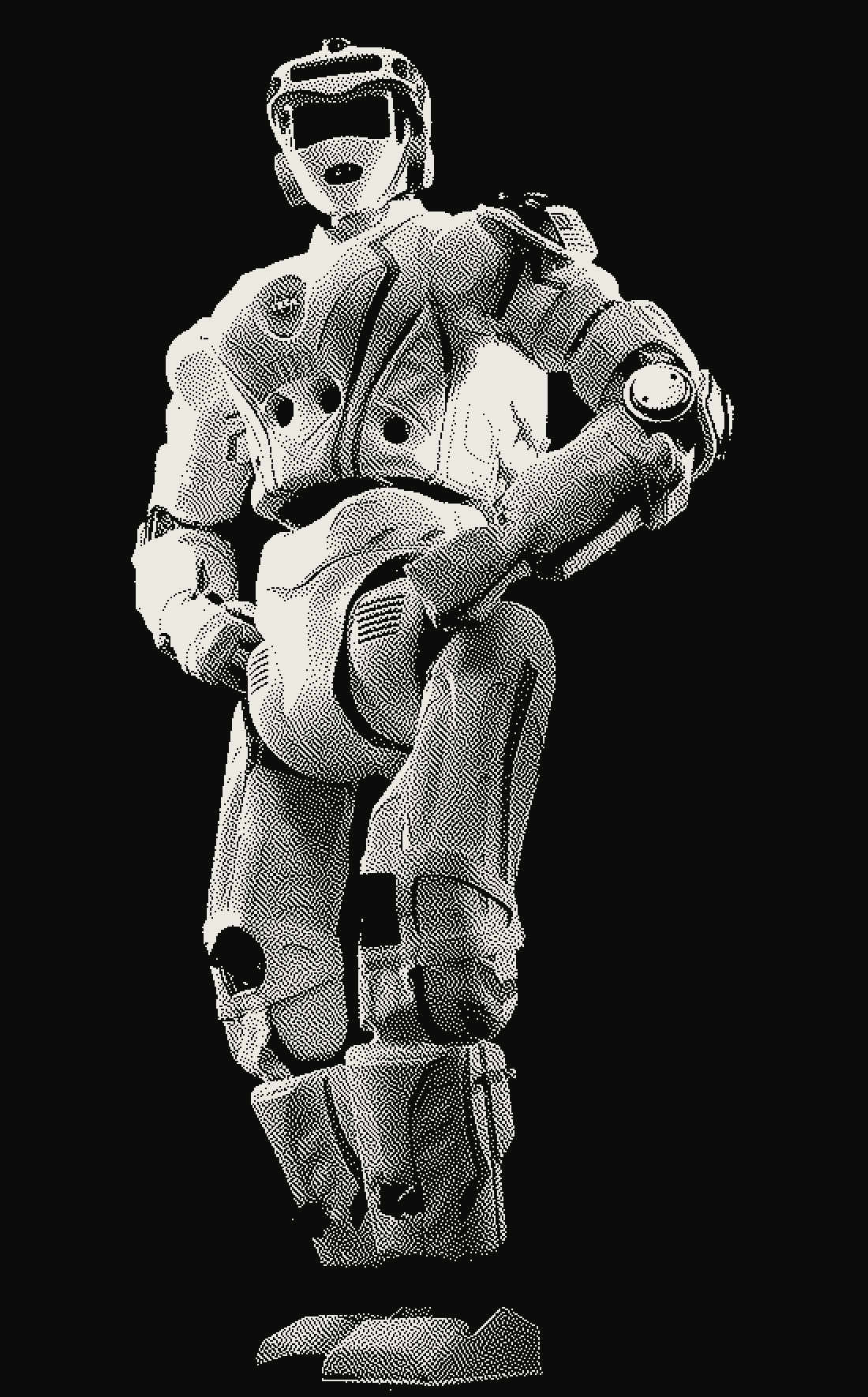
Five things a robot needs to remember.
| Memory | Holds | Example |
|---|---|---|
| Spatial | Where things are | Aisle 4 shelf coordinates, clearance heights, dock pins |
| Episodic | What happened | Spill detected 14:32, emergency brake at WP-12 |
| Semantic | What things mean | Hazard class 3 needs a 2 m buffer |
| Procedural | How to do it | Lift routine for oversized corrugated bins |
| Object | What a thing is like | Pallet 4821: 450 kg, centre of mass offset 12 cm |
Learn once. Verify. Share with every unit.
One unit hits something new
It lands on a branch first
The fleet has it on next sync
Embedded. Offline. Then synced.
The engine links into the robot’s edge computer and keeps working with no network. Sync pushes what the unit learned and pulls what the fleet learned, reconciling any divergence.
# On the robot's edge computer. Local-first: works with no network.
from clawdb import clawdb
db = await clawdb()

await db.memory.remember(
    "Aisle 7 blocked by pallet stack; reroute via aisle 9",
    tags=["spatial", "aisle:7", "obstacle"],
)

# Back in range: push local learning, pull the fleet's
await db.sync()
What a warehouse robot writes in a day.
A robot shouldn’t have to rediscover the world
Watch how physical robots resolve real-world anomalies in sub-millisecond memory cycles.
SEES warehouse aisle 4 blocked
REMEMBERS previous blockage at 14:32
RETRIEVES reroute policy via aisle 3
EXECUTES autonomous reroute
STORES outcome & updates fleet map
Sensor artifacts, linked to what they mean.
Object storage sits beside memory and the graph, so a fact can point at the frame, scan or log that produced it.
Artifacts next to memories
Presigned for large files
Find the frame, not just the fact
Pleiades supercomputer, NASA Ames. Photo: NASA, public domain.
Robotics questions.
Can a robot query memory inside its control loop?
Yes. The embedded runtime runs on the robot’s own computer with local-benchmark P99 retrieval under half a millisecond, so planners can query spatial clearance and object heuristics without a network hop.
What happens without connectivity?
Nothing changes. Robots read and write local memory with full transactions. When a link comes back, clawdb_sync pushes local changes and pulls the fleet’s, and reconciles divergent state.
Can it store point clouds and camera frames?
Yes. Binary artifacts are stored as objects and linked to memories and graph entities, so a recalled fact can lead straight to the sensor data behind it.
How do you stop one robot’s bad data spreading?
Write novel observations to a branch. Merge only after confirmation from another unit, a simulator run or an operator. Unconfirmed branches can be discarded without touching fleet memory.
Does it work with ROS 2 and simulators?
Yes. Use the Python SDK from ROS 2 nodes, and fork fleet memory into Isaac Sim or Gazebo runs to test policies before merging them to physical robots.